
annual global cost of untreated hearing loss, according to WHO-linked research
AI for good purpose
Reading the world, writing the future
The first immersive literacy platform using generative AI for 34 million deaf children.
For families, schools, foundations, researchers, and impact partners.
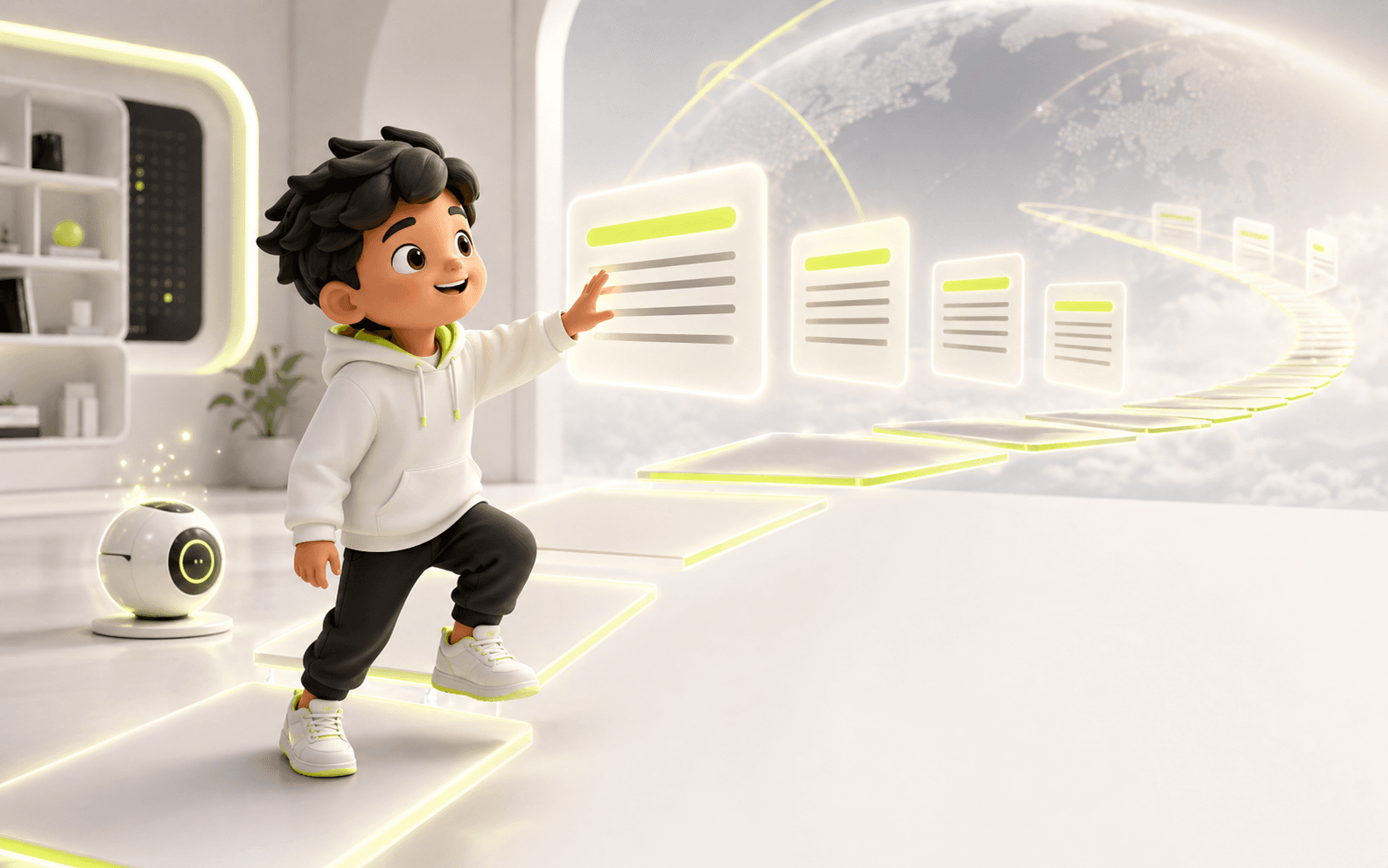
STATUS
Alpha prototype now forming the V1 waitlist
34Mdeaf children worldwide
5-12core learning age
16 yrsmethod validation
The barrier is not deafness
It is the lack of access to reading and writing.
Read & Write turns a deeply human education gap into a scalable digital path: a child can play, receive feedback, and begin acquiring written language without depending on constant one-to-one therapy.
A medical emergency can become impossible when a deaf person cannot read or write. The work behind Read & Write exists so a child is never left without language when language matters most.
of deaf children worldwide lack access to effective formal education, according to WFD-cited materials
reported income gap for deaf workers versus hearing peers in US data
Product
A game where written language becomes the environment.
The platform combines generative AI, immersive storytelling, avatars, and instant feedback so children can encounter written sentences at the right level, again and again.
WATCH THE DEMO
SEE READ & WRITE IN ACTION
Click to watch the English product video, then move through the gameplay scenes.Generative AI tutor
Creates tailored sentence practice in real time.
Gamified retention
Uses story, avatars, and interactive choices to keep children engaged.
Instant feedback
Gives grammar correction without waiting for constant adult support.
Affordable scale
Transforms a clinical method into a SaaS platform for families and institutions.
Evidence
Built on 16 years of clinical, educational, and neuroscience validation.
Before becoming software, the method proved itself through pencil-and-paper practice, clinical work, and a Latin American network of 27 Logogenia professionals across 10 countries who can help bring the platform to the families they already serve, moving today's manual practice into a scalable digital experience.
deaf children gained literacy skills through the underlying method
controlled-study foundation from clinical validation
countries connected through the Latin American Logogenia network
neuroscience credibility through the Antioquia Neuroscience Group
The Deaf: an unknown and unjust world
The English edition makes the human, clinical, and educational foundation behind Read & Write accessible to global partners.
Read English PDFCurrent plan
From alpha prototype to V1 launch.
Alpha prototype
Core gameplay, AI sentence generation, and learning loop validation.
Pilot waitlist
Families, schools, and partners join the first structured access cohorts.
Platform launch
Desktop web app, progress signals, partner onboarding, and scalable content loops.
Expanded literacy
More users, more languages, and expansion to general learners beyond the deaf population.
B2C
For parents
A practical, hopeful way to help a deaf child build written language through play, repetition, and feedback.
Join as a familyB2B / IMPACT
For investors
and partners
A high-impact assistive learning company with validated roots, a clear market need, and a software path to scale.
Start a partner conversationTeam
A founding team joining literacy, neuroscience, AI, and global education.
In memory of Dr. Francisco Lopera, Director of GNA and Potamkin Prize 2024 recipient, whose final work helped carry this vision forward.
Eliana Fernández
CEO & founder
Author of Sordos and creator of Logodáctica.
Alejandro Acosta
CTO & founder
AI prototype developer.
Rodrigo Arboleda
Global strategy & founder
Former CEO of One Laptop Per Child.
Elkin Echeverri
Innovation & founder
Tech ecosystems expert.
Karina Lopera
Editorial coordinator & founder
Literature scholar, anthropologist, and editorial PM.
Waitlist
Help shape the first V1 cohorts.
Tell us who you are and how you want to be involved. We will use this list to prioritize pilots, family access, research, and institutional conversations.